Proven Strategies for Maintaining Your Terrazzo Floors Effectively
- Acidic cleaners can cause irreversible etching of the marble chips embedded in Terrazzo, leading to dull spots that are impossible to restore through regular cleaning.
- Strong alkaline products can progressively weaken the cement binder, resulting in dark patches, soft areas, and an overall loss of clarity on the surface.
- Abrasive pads, harsh brushes, and over-scrubbing can scratch the floor’s surface and expose pinholes, making maintenance considerably more challenging.
- Steam cleaners and excessive moisture can penetrate the cement binder, causing darkening and long-term deterioration that can be difficult to reverse.
- Choosing pH-neutral cleaners and gentle cleaning tools is the safest way to keep Glasgow terrazzo floors looking vibrant and uniform.
Terrazzo Floors: Terrazzo is renowned for its remarkable resilience and heritage appeal as a flooring option; however, it is often more sensitive than many homeowners anticipate. Whether your floor originates from a classic Glasgow tenement, is part of a mid-century renovation, or is a contemporary installation selected for its distinctive character, the surface is made up of a combination of marble chips and a cement binder. Both components can react unfavourably to specific products, tools, and DIY cleaning techniques. This comprehensive guide will provide insight into what to avoid, the importance of these decisions, and how seemingly minor choices can safeguard your flooring for years to come.
Expert Insights: Recommended Products for Daily Terrazzo Cleaning in Glasgow
|
Fila Pro Floor Cleaner
|
LTP MPG Sealer H20
|
Vileda H2PrO Spin Mop System
|
Understanding the Importance of Proper Terrazzo Care in Glasgow

In Glasgow, terrazzo floors carry a rich history, with many surfaces in traditional tenements laid as solid slabs. Meanwhile, mid-century and modern buildings may showcase terrazzo tiles. Regardless of their style or age, the passage of time impacts the cement binder in a consistent manner. Over the years, this binder becomes more porous, resulting in increased moisture absorption and dirt retention—even after cleaning. This reality underscores why certain products that seem harmless on contemporary materials can cause irreversible dullness, softening, or staining on older terrazzo surfaces.
How Does Domestic Terrazzo Age in Scottish Homes?
As time passes, the cement binder gradually decreases in density. Regular cleaning with potent household detergents only speeds up this natural decline, leading to a floor that becomes progressively more absorbent over time. Once the binder becomes porous, dirt embeds itself deeper and cannot be effectively removed through standard cleaning methods. This explains why dark traffic lanes often re-emerge in hallways or kitchens, even after thorough scrubbing—because the dirt resides beneath the surface within softened cement. Additionally, older Glasgow homes may feature sections where flooring has been lifted for plumbing or electrical repairs, resulting in varying moisture responses and cleaning interactions.
Why Do Certain Products Cause Irreversible Damage to Terrazzo?
The marble chips incorporated into terrazzo are particularly susceptible to acidic substances, while the cement matrix is vulnerable to prolonged exposure to alkaline environments. This specific combination renders the floor susceptible to damage from both ends of the pH spectrum. When an acidic product etches the marble, the damage occurs immediately and is irreversible; conversely, when an overly alkaline cleaner degrades the cement, the damage accumulates over time but is equally severe. The only remedy for both situations is grinding and honing, which physically removes the damaged layer to restore the floor’s integrity.
Cleaning Products and Chemicals to Avoid for Terrazzo Maintenance

The chemistry of cleaning products significantly affects how terrazzo behaves during everyday use. Even products marketed as “stone safe” can be detrimental if they contain inappropriate ingredients. Understanding which categories of cleaners are unsuitable and why they are ineffective is the best preventative strategy to protect your flooring.
Why Acidic Products Pose Etching Risks to Terrazzo?
Any cleaning solution containing acids will negatively react with the marble chips found in the floor. This includes limescale removers, vinegar solutions, brick cleaners, citrus-based sprays, and many bathroom cleaning agents. Even mild acidity can wear down the surface of the marble, leading to unsightly dull spots, rings, or light patches that cannot be corrected. These marks may feel smooth to the touch but appear cloudy, creating an uneven aesthetic that becomes more pronounced under direct lighting. Once etching occurs, the only solution is professional resurfacing to restore the original finish.
How Strong Alkalis Contribute to Cement Binder Breakdown?
Conversely, potent alkaline cleaners—such as bleach, heavy-duty degreasers, sugar soap, and concentrated detergents—gradually undermine the cement binder. The surface becomes increasingly porous, allowing moisture and soil to penetrate more deeply. Over time, this results in persistent darkening, soft patches, and a chalky or uneven finish. Homes where terrazzo has been covered with vinyl or carpet often exhibit this type of deterioration because the binder absorbed cleaning residues over many years.
Cleaning Tools, Pads, and DIY Methods to Avoid for Terrazzo Maintenance
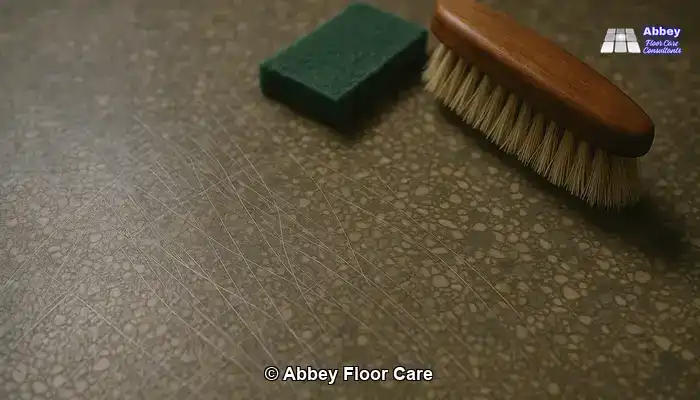
While terrazzo may feel solid underfoot, the surface is surprisingly susceptible to scratches when inappropriate tools are used. Damage typically manifests as grey patches, swirl marks, or areas where small pinholes become visible after aggressive scrubbing.
Why Are Abrasive Pads, Brushes, and Over-Scrubbing Detrimental?
Scouring pads—even those typically used in kitchens—are excessively abrasive and can scratch the marble chips, creating tiny voids in the cement binder. Rigid brushes and excessive scrubbing can produce similar results. Once these scratches appear, dirt accumulates in these areas and becomes increasingly visible with each cleaning cycle. DIY polishing powders should also be avoided, as they often contain mild acids or abrasive materials that can damage the surface rather than enhance its shine.
How Can Steam Cleaners and Excessive Moisture Cause Damage?
Steam cleaning forces water into the porous surface, particularly on older terrazzo. The cement binder absorbs this moisture, resulting in dark patches that may take days to dry completely. Repeated steam cleaning can further compromise the binder, leading to cracks, soft areas, or crumbly spots. Similarly, excessive wet mopping can produce grey or patchy regions that never fully brighten, resulting in an unappealing appearance.
Types of Sealers, Polishes, and Coatings to Avoid for Terrazzo
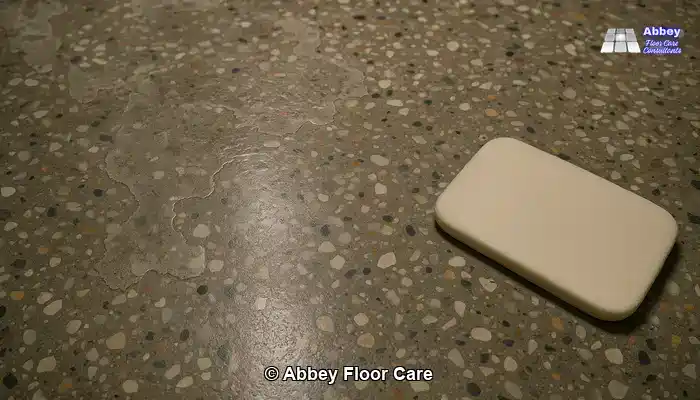
Not every sealer is suitable for terrazzo. Some can create more issues than they resolve, particularly on older floors with naturally variable absorption rates.
Why Should DIY Shine Restorers and Wax-Based Treatments Be Avoided?
Acrylic topical coatings are often selected for their ability to create a sacrificial wear layer and achieve a mid-sheen or glossy finish without necessitating mechanical polishing. However, they require consistent maintenance, leading to potential problems. If the floor is not thoroughly cleaned before re-coating, if damaged or peeling layers are not completely removed, or if excess layers are applied, the finish can deteriorate quickly. The result is an unattractive, uneven surface that worsens with each additional layer.
Wax polishes and “quick gloss” restorers may initially seem appealing, but they can easily trap dirt, and many also yellow over time, detracting from the floor’s visual appeal.
Moreover, if the floor requires ventilation, topical coatings can inhibit moisture movement in the concrete, causing future complications.
Best Practices for Safe Daily and Weekly Terrazzo Maintenance
The most effective strategy for any terrazzo floor—whether vintage or contemporary—is surprisingly straightforward. Care should focus on gentle cleaning techniques, controlled moisture levels, and effective protective habits.
Utilising pH-Neutral Cleaning Solutions and Proper Dilution
Employing a pH-neutral cleaner is paramount for safeguarding both the marble and the cement binder. Use a microfibre mop and frequently change the water to prevent reapplying dirt. Avoid over-wetting the floor; generally, light damp cleaning suffices. This routine helps maintain the surface’s brilliance without causing wear.
Implementing Protective Habits for Long-Term Preservation of Terrazzo
Simple habits can yield significant benefits. Position doormats at entryways, particularly during Glasgow’s rainy season, to minimise dirt entry. Promptly addressing spills is crucial to prevent absorption into the floor. Avoid dragging furniture, as this can scratch the marble chips. With the right care routine, terrazzo develops a consistent, natural sheen that enhances both historic and modern homes.
Recognising When to Consult a Terrazzo Specialist in Glasgow
Some issues extend beyond what standard cleaning can resolve. Identifying these early signs can prevent further damage and significantly reduce restoration costs.
What Are the Warning Signs Indicating Structural or Surface Issues?
If your floor exhibits persistent dark patches, new cracks, soft areas, or dull spots that seem resistant to brightening, these often signify deeper binder deterioration. Hollow-sounding tiles may indicate debonding, warranting further investigation. Etched patches, scratches, or unevenness between tiles also necessitate professional assistance.
Why Is a Professional Assessment Essential for Preventing Further Damage?
A specialist can ascertain whether the issues arise from cleaning habits, moisture exposure, age-related binder degradation, or structural shifts. They can also advise on whether resurfacing, filling, sealing, or levelling is required. By addressing problems promptly, you can protect the floor’s visual appeal and its long-term stability.
Frequently Asked Questions About Terrazzo Maintenance
Can I Use Vinegar or Lemon-Based Cleaners on Terrazzo?
No. Both are acidic and will etch the marble chips, resulting in permanent dull spots that cannot be repaired.
Why Does My Terrazzo Look Grey Even After Cleaning?
Grey patches often signify scratches, binder degradation, or embedded dirt beneath the surface. Routine cleaning alone cannot eliminate these problems.
Is Steam Cleaning Safe for Terrazzo?
No. Steam forces moisture into the cement binder, leading to dark patches and long-term structural weakening.
Do I Need to Seal My Terrazzo?
Yes, but only with an appropriate impregnating sealer. Avoid topical coatings unless specifically recommended by a specialist.
Can I Fix Etching or Dull Spots Myself?
Unfortunately, no. Etching requires professional grinding and honing to restore the floor’s clarity and appearance.
Key Insights for Effective Terrazzo Care
Maintaining terrazzo is less about performing more tasks and more about avoiding incorrect practices. With the right routine, this material can remain vibrant, clean, and heritage-friendly for many years. When challenges arise, seeking early professional guidance can prevent more severe damage and restore the unique character that makes terrazzo so desirable. The key lies in understanding how the marble and cement components interact and selecting products that respect both.
Meet the Author: David Allen
David Allen is a highly experienced stone and tile restoration specialist with over thirty years of practical experience in homes across the UK. His career has revolved around restoring, protecting, and preserving natural stone surfaces, ranging from delicate Victorian encaustic tiles to valuable marble and limestone installations.
David’s expertise encompasses deep mechanical refinishing, stain and etching correction, diamond abrasive sequencing, breathable sealing systems, and the specialized restoration of heritage flooring. With extensive real-world problem-solving experience, he offers precise, reliable guidance based on thousands of completed restoration projects.
David is committed to educating homeowners, highlighting safe practices, long-term protection, and clear maintenance techniques that prevent unnecessary damage. His work integrates craftsmanship, technical knowledge, and a calm, reassuring communication style that empowers homeowners to make informed decisions regarding the care of their stone and tile surfaces.
The Article The Hidden Threats to Terrazzo Floors Every Glasgow Homeowner Should Know was first found on https://www.abbeyfloorcare.co.uk
The Article Terrazzo Floors: Hidden Threats Glasgow Homeowners Must Know appeared first on https://fabritec.org
The Article Terrazzo Floors: Essential Risks Every Glasgow Homeowner Should Know Was Found On https://limitsofstrategy.com
References:
https://limitsofstrategy.com/terrazzo-floors-essential-risks-every-glasgow-homeowner-should-know/