
When choosing between gas and electric hot water systems, many homeowners in Sydney often wait until their current system fails—typically on a cold morning when everyone is eager to shower. It’s crucial to understand that there is no one-size-fits-all solution. Electric storage tanks are usually the most cost-effective option to buy and install. Heat pumps are the most efficient choice among electric systems, while gas systems are perfect for homes that already have gas connections and require a reliable hot water supply for active families.
Selecting the right system for your household involves several factors: availability of a gas connection, the number of people using hot water and their consumption habits, the installation space, and the presence of rooftop solar panels. This guide will help you evaluate these aspects, streamlining your decision-making process before you consult a plumber about your current setup.
- Heat pumps consume significantly less energy than traditional electric tanks or gas systems to heat the same volume of water.
- Gas hot water systems necessitate either a gas connection or space for LPG bottles.
- Utilising rooftop solar can greatly diminish the operational costs of electric tanks or heat pumps.
- Switching from gas to electric or vice versa often requires modifications to pipework, power supplies, or flues, necessitating a comprehensive site assessment before installation.
- In New South Wales, all new hot water system installations must be carried out by a licensed plumber or gas fitter, with compliance certificates issued.

In-Depth Comparison of Gas and Electric Hot Water Systems
The table below highlights the key distinctions between gas and electric hot water systems, adhering to guidelines from the Australian Government’s energy.gov.au and its Your Home guide.
| Comparison Criteria | Electric Storage | Heat Pump (Electric) | Gas Continuous Flow or Storage |
|---|---|---|---|
| Initial Purchase and Installation Cost | Lowest among the three options | Higher initial purchase and installation cost | More expensive than electric tanks but cheaper than heat pumps |
| Operating Cost | Generally more expensive to operate unless powered by solar energy | Cost-effective to operate | Moderate to high operating costs |
| Heat Output Relative to Energy Consumption | Just under one unit of heat for each unit of electricity | Approximately three to five units of heat for each unit of electricity | About three quarters to just under one unit of heat for each unit of gas |
| Requirements for Home Installation | Requires a power supply and space for the tank | Needs outdoor space for the unit | Requires a gas connection or LPG bottles, plus outdoor venting |
| Risk of Running Out of Hot Water | Possible if the tank size is insufficient | Possible if the tank size is insufficient | Continuous flow units do not run out, but storage tanks can if undersized |
How Electric Hot Water Systems, Including Heat Pumps, Work
Electric storage systems heat water using an element located within an insulated tank—similar to a large kettle—and maintain the temperature until needed. According to the Australian Government, around half of Australian households utilise these systems. They are the most economical to purchase and install but often incur higher running costs unless powered by rooftop solar.
Many electric tanks operate on an off-peak or controlled load circuit, allowing water to be heated during periods of lower electricity costs. The Your Home guide suggests that tanks exceeding 250 litres are ideal for off-peak usage, as smaller tanks may run out of hot water before the circuit reactivates.
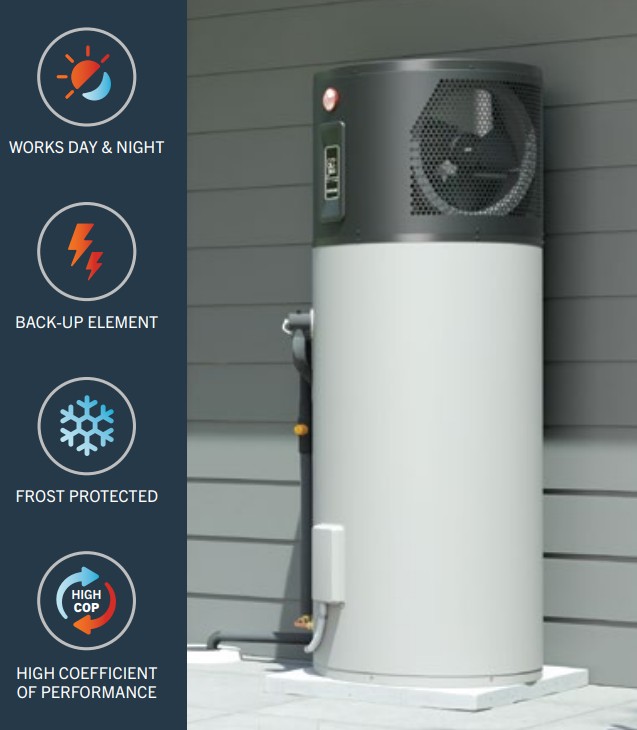
Heat pumps, while classified as electric hot water systems, function differently. They do not heat water directly; instead, they use a fan and compressor to extract warmth from the surrounding air and transfer it into the tank. Government data indicates that heat pumps consume about 30 percent of the energy used by standard electric systems. When considering heat pumps, keep in mind:
- The compressor generates noise; therefore, placement should be away from bedroom windows and neighbours.
- An integrated unit can be mounted on top of the tank, serving as a straightforward replacement for an old electric tank.
- A split unit separates the tank from the outdoor compressor, allowing for flexible placement of each component.
Electric instantaneous units are also available, but the Your Home guide warns that they draw substantial power and usually require a three-phase connection, which many homes may not have.
How Gas Hot Water Systems Function in Sydney Homes
Gas systems heat water by combusting gas, whether it flows through the unit or within a storage tank. The most common type is continuous flow gas hot water, which heats water on demand as taps are turned on, ensuring there is no shortage. These units are compact as they do not require a storage tank. In contrast, gas storage tanks heat water quickly, allowing for a smaller tank size compared to electric systems. The government guide points out that these tanks can be particularly inefficient, as heat can escape from the bottom where the flame is located.
Typically, gas hot water systems are installed outdoors due to venting regulations. Natural gas is supplied through the street network, while homes lacking this connection can operate on bottled LPG. The Your Home guide indicates that an LPG system generally requires two or more 45 kg bottles to avoid frequent replacements, and running costs for LPG systems can be two to three times higher than those for systems connected to natural gas.
Evaluating the Running Costs and Efficiency of Gas and Electric Hot Water Systems
Heating water constitutes a significant portion of a household’s energy consumption. The Australian Government estimates that this accounts for 15 to 30 percent of total household energy use, marking it the second-largest contributor to energy expenses in the home.
The Your Home guide evaluates systems based on their heat output relative to energy input. A heat pump delivers approximately three to five units of heat for every unit of electricity consumed, whereas a new electric storage tank provides just under one unit, and gas systems yield between three quarters and just under one unit of heat for each unit of gas. The guide identifies heat pumps as among the most economical systems to operate, while gas systems are often seen as costlier in the long run. Households considering replacing a gas system are encouraged to explore efficient electric options. Gas systems are known for their reliability and space efficiency.
Ultimately, your actual costs will depend on your electricity tariffs, the household’s hot water consumption, and whether you utilise solar energy. Homes equipped with extensive rooftop solar systems can use their own daytime power to operate an electric tank or heat pump. The Your Home guide suggests this can lead to very low-cost hot water with minimal emissions. Conversely, homes with existing gas connections and no solar may find that a continuous flow gas system is a practical choice, especially when the household has frequent back-to-back showers.
Is Your Home Equipped with a Gas Connection for Hot Water?
Before selecting gas, the primary consideration is whether your home has a gas connection. If you currently have a gas meter supplying a cooktop or an older gas hot water unit, then access is already established. Switching to a continuous flow unit may necessitate a larger gas pipe or meter to provide sufficient hot water for multiple taps at once.
For homes that have never had gas service, a new connection can be requested through Jemena, the gas network provider, or via your energy retailer. Jemena advises that as of 1 October 2026, customers requesting new gas connections will be responsible for covering the full connection cost upfront. For homes without gas, this connection expense should be considered in the overall cost comparison alongside the hot water system itself.
Finding the Ideal Hot Water System for Your Household
Once you understand what your property can accommodate, the next step is for your household to make the final decision. We commonly guide Sydney homeowners through these critical considerations when selecting a replacement:
- How many residents are there? The Your Home guide suggests a typical usage of about 50 litres of hot water per person per day, and undersized tanks can lead to running out of hot water.
- When do household members typically use hot water? Multiple showers in quick succession during mornings favour a continuous flow gas system or a properly sized tank.
- Do you have rooftop solar panels? Solar energy can make operating an electric tank or heat pump more economical.
- What outdoor space is available? A heat pump requires an outdoor location, ideally distanced from bedroom windows.
- Are you constructing a new home? In NSW, BASIX mandates energy and emission targets. The Your Home guide indicates that higher emission systems, such as electric storage tanks, might require solar installations to comply.
If your current system is aging but still functional, exploring your options now is advisable. The government guide emphasises this point: making a decision is far simpler when you’re not caught in a cold shower waiting for a replacement.
Transitioning Between Gas and Electric Hot Water Systems
Performing a like-for-like replacement is the most straightforward installation, as the necessary pipework and supply are already in place. Transitioning from electric to gas involves connecting the new unit to the gas supply and ensuring the appropriate flue is fitted, with careful attention to safe venting. Conversely, switching from gas to a heat pump requires alterations to the site’s requirements; the outdoor unit must be suitably positioned, and new electrical circuits or power points will be necessary. We collaborate with trusted local electricians for these tasks.
Regardless of the direction you choose, the installation must comply with the national plumbing standard for heated water services, AS/NZS 3500.4. Storage systems must heat water to at least 60°C regularly to prevent bacterial growth, such as Legionella, while a tempering valve must be installed to ensure tap water does not exceed 50°C to prevent scalding. In NSW, all plumbing or gas fitting work, including LPG, must be completed by a licensed plumber or gas fitter, irrespective of the project’s cost. Blue Rhino Plumbing holds NSW contractor licences 289152C and 356773C, ensuring that plumbing, gas connections, and flue installations are handled by a cohesive team, and you will receive compliance certificates for all installations.
For more information about the systems we install and replace, visit our hot water repairs and installation page, or learn about connections and compliance on our gas fitting page.
Common Questions Regarding Gas vs Electric Hot Water Systems
Which is more cost-effective to operate: gas or electric hot water?
The answer varies based on the specific electric system in use. Government guidance indicates that heat pumps are economical to operate, while standard electric storage tanks often incur higher running costs unless they are solar-powered. Gas systems are described as having moderate to high operating costs. Your specific tariffs, hot water consumption, and solar energy usage will ultimately influence the final outcome.
Is a heat pump a better option compared to gas hot water?
From an energy efficiency standpoint, yes. A heat pump can yield approximately three to five units of heat per unit of electricity, whereas a gas system produces less than one unit of heat per unit of gas. Although heat pumps have a higher initial cost and require outdoor space away from bedrooms, gas continuous flow systems are often better suited for homes with existing gas connections that require a consistent hot water supply.
Can electric hot water systems operate on off-peak power?
Many electric storage tanks are designed to operate on an off-peak or controlled load circuit, which offers lower rates. Tanks larger than 250 litres are best suited for this type of operation. Smaller tanks may run out of hot water before the circuit is reactivated. Certain heat pumps may only work with specific types of controlled load circuits, so it’s crucial to check the manufacturer’s instructions.
Are gas hot water systems required to be installed outdoors?
Due to venting requirements, gas hot water units are generally installed outdoors. Some models of gas continuous flow can be installed indoors, provided adequate ventilation is available. We assess possible locations for the unit and flue during our property evaluations.
Is a licensed gas fitter necessary for gas hot water installation in NSW?
Yes, a licence or certification is mandatory for any plumbing, drainage, or gas fitting work in NSW, including LPG gas fitting, regardless of the project’s cost. This includes connecting a new gas hot water system to the supply.
Receive Expert Assessment of Your Hot Water System from Blue Rhino Plumbing
If you are weighing the advantages and disadvantages of gas versus electric hot water systems, your next step is to evaluate your existing system, gas supply, and the surrounding space. We will present you with the best options tailored to your home and household needs, managing the supply and installation of your chosen system, whether it involves a straightforward replacement, a heat pump, or a transition from electric to gas.
Blue Rhino Plumbing serves all areas of Sydney, including Ryde, North Ryde, and Macquarie Park, with technicians available around the clock for emergencies if your hot water system has already failed. To discuss your requirements, call 0468 014 771, email plumbing@thebluerhino.com, or submit an enquiry. Rueben and the team are eager to assist you in determining the best solution for your home.
Original Article First Published At: Gas vs Electric Hot Water: Which Hot Water System Suits Your Sydney Home
The Article: Gas Vs Electric Hot Water Systems for Your Sydney Home first appeared on https://writebuff.com
The post Gas and Electric Hot Water Systems for Sydney Homes appeared first on Limits Of Strategy.